






Introduction
As the world moves toward renewable energy, the solar industry is becoming smarter, more connected, and data-driven. Today’s users expect clean, intuitive digital platforms that make energy management simple and insightful. That’s where strong UI/UX design plays a key role. At Artonest Design, our goal is to create digital experiences that help solar companies turn complex data into easy-to-understand dashboards. Let’s explore how thoughtful design can transform solar energy SaaS platforms for better performance, engagement, and growth.
The Need for Smarter Solar Platforms
Modern solar systems generate massive amounts of data—panel output, weather patterns, maintenance schedules, and energy savings. Without the right interface, this information can overwhelm users.
A smart solar energy platform organizes that data into clear visuals, helping users monitor performance, track efficiency, and make informed decisions. For SaaS providers, a strong design isn’t just about looks—it improves user retention, trust, and long-term product success.
Role of UI/UX in Solar Energy SaaS
UI/UX design defines how users interact with solar dashboards. From farmers monitoring solar farms to homeowners checking rooftop energy output, every detail matters.
Key UI/UX principles in solar design include:
Data clarity – Use visual hierarchy and clean layouts to present energy trends and metrics.
Real-time updates – Display live energy generation, weather conditions, and system health.
Interactive elements – Allow users to explore performance by day, week, or month.
Accessibility – Ensure the platform is intuitive across devices and user types.
At Artonest, we design solar dashboards that are simple, responsive, and beautiful—so data feels approachable, not intimidating.
From Data to Design: Turning Insights into Experience
Solar platforms collect endless data points, but the user experience determines how valuable that data becomes. A well-designed dashboard helps users act on insights instantly.
For example, a smart solar energy dashboard can show when power output dips, highlight efficiency trends, and recommend maintenance actions. This combination of analytics and design turns a technical tool into a powerful everyday companion.
Our design process focuses on aligning data visualization with human understanding—helping SaaS platforms communicate performance in seconds.
Designing for Efficiency and Trust
The solar industry thrives on reliability. A user interface that looks professional and operates smoothly builds credibility. Consistent colors, balanced typography, and clear graphs all contribute to user confidence.
We often use soft gradients, minimalist icons, and muted tones to reflect sustainability while keeping the interface modern. These subtle design choices make a solar SaaS platform feel stable and trustworthy.
Personalization in Solar Dashboards
Every user has different needs—an installer might track maintenance logs, while an investor wants revenue insights. That’s why personalization is crucial in solar dashboard design.
Our approach focuses on:
Customizable widgets to adjust the view.
Location-based insights for weather and sunlight data.
Energy goals tracking for homeowners and businesses.
By allowing users to see what matters most to them, SaaS platforms become more engaging and meaningful.
Mobile-First Solar Monitoring
Energy management isn’t limited to desktops anymore. With mobile devices, users expect to check solar performance anywhere, anytime.
Designing mobile-friendly solar platforms ensures accessibility and quick interaction. Responsive layouts, larger touch targets, and simplified navigation improve usability on smaller screens—without losing essential data.
Integrating Smart Technology
Next-gen solar platforms often connect with AI, IoT sensors, and predictive analytics. The challenge is displaying this advanced technology in a user-friendly way.
For instance, AI can predict when panels need cleaning or maintenance. The dashboard can then notify the user with clear visuals or smart alerts. These features make a solar energy SaaS product not only intelligent but proactive.
A great design turns these complex features into an effortless experience that feels simple, even when the technology behind it isn’t.
Case Study: Solarex UI/UX Design
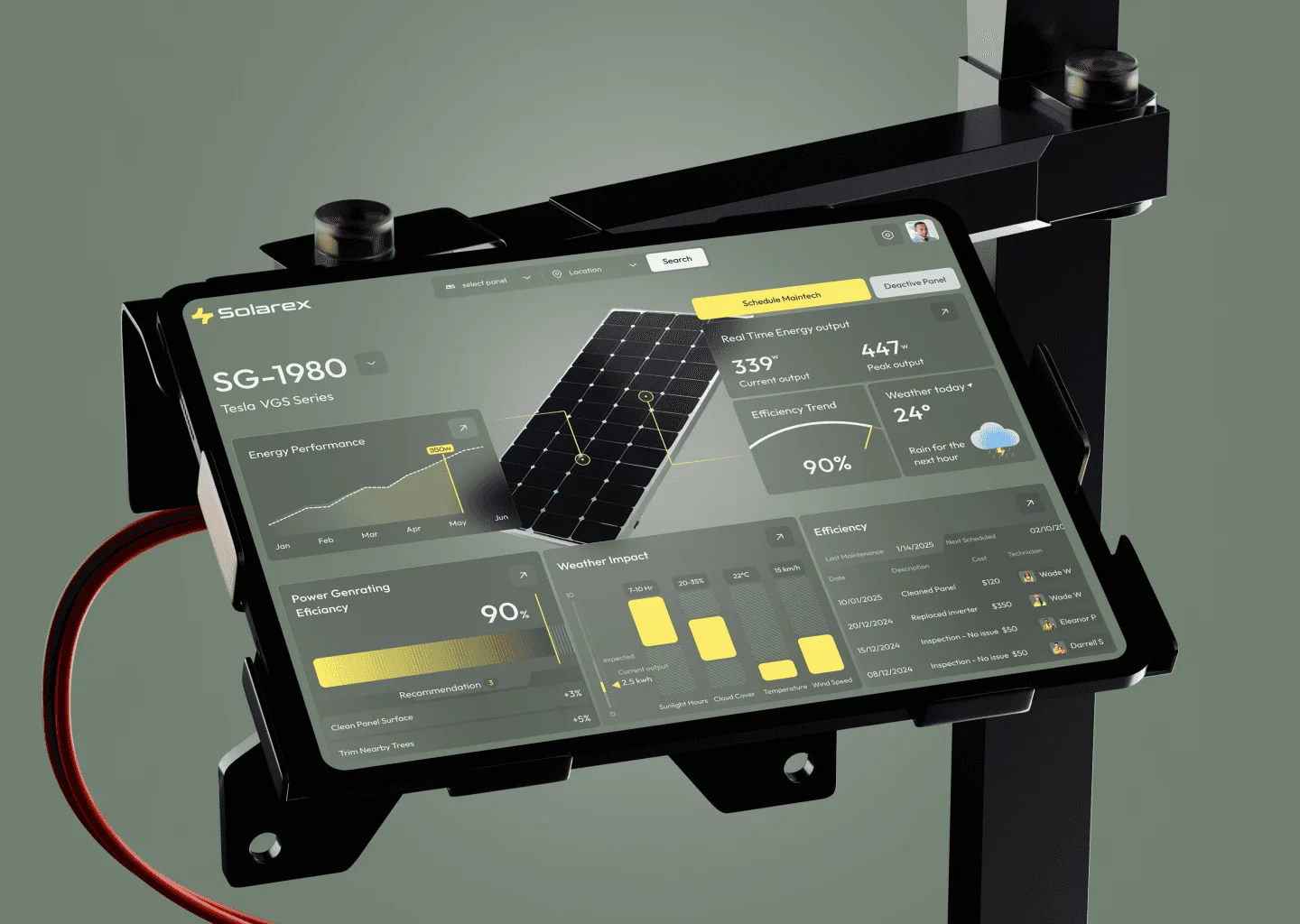
Our Solarex concept demonstrates how design can simplify solar management. The dashboard shows real-time power output, weather impact, and energy trends—all in one clean interface.
It balances aesthetics with function, using data cards, color coding, and charts for quick analysis. Users can instantly view revenue, efficiency, and system health without scrolling through clutter.
This type of solar dashboard UI/UX helps SaaS companies present data transparently while improving the overall digital experience.
The Future of Solar Energy Platforms
As solar technology advances, platforms will continue integrating more automation and predictive insights. The next step in design is personalization powered by AI—interfaces that adapt to user behavior, energy usage, and goals.
By combining clean UI, responsive design, and sustainability-focused visuals, designers can create solar software that not only looks good but genuinely supports global energy efficiency.
At Artonest Design, we believe the future of solar energy platforms lies in human-centered design—where innovation meets clarity.
Why Design Matters for Solar SaaS Growth
Good design does more than improve usability—it drives conversions and customer satisfaction. When users find value easily, they stay longer and trust the product.
Solar SaaS companies that invest in UI/UX design gain a strong advantage. They stand out in a competitive market, reduce churn, and attract eco-conscious users who appreciate clarity and innovation.
A smart solar platform built with design thinking isn’t just a tool—it’s an experience.
Final Thoughts
Design is the bridge between technology and people. In the world of solar energy, that bridge helps users understand their power, efficiency, and environmental impact.
A well-designed solar energy SaaS platform empowers users to make better decisions and encourages a shift toward a more sustainable future.
At Artonest Design, we specialize in creating intuitive, future-ready digital platforms that bring clarity to complex data. If your solar business is ready to take its next step, we’re here to help design the platform that powers it.
The Need for Smarter Solar Platforms
Modern solar systems generate massive amounts of data—panel output, weather patterns, maintenance schedules, and energy savings. Without the right interface, this information can overwhelm users.
A smart solar energy platform organizes that data into clear visuals, helping users monitor performance, track efficiency, and make informed decisions. For SaaS providers, a strong design isn’t just about looks—it improves user retention, trust, and long-term product success.
Role of UI/UX in Solar Energy SaaS
UI/UX design defines how users interact with solar dashboards. From farmers monitoring solar farms to homeowners checking rooftop energy output, every detail matters.
Key UI/UX principles in solar design include:
Data clarity – Use visual hierarchy and clean layouts to present energy trends and metrics.
Real-time updates – Display live energy generation, weather conditions, and system health.
Interactive elements – Allow users to explore performance by day, week, or month.
Accessibility – Ensure the platform is intuitive across devices and user types.
At Artonest, we design solar dashboards that are simple, responsive, and beautiful—so data feels approachable, not intimidating.
From Data to Design: Turning Insights into Experience
Solar platforms collect endless data points, but the user experience determines how valuable that data becomes. A well-designed dashboard helps users act on insights instantly.
For example, a smart solar energy dashboard can show when power output dips, highlight efficiency trends, and recommend maintenance actions. This combination of analytics and design turns a technical tool into a powerful everyday companion.
Our design process focuses on aligning data visualization with human understanding—helping SaaS platforms communicate performance in seconds.
Designing for Efficiency and Trust
The solar industry thrives on reliability. A user interface that looks professional and operates smoothly builds credibility. Consistent colors, balanced typography, and clear graphs all contribute to user confidence.
We often use soft gradients, minimalist icons, and muted tones to reflect sustainability while keeping the interface modern. These subtle design choices make a solar SaaS platform feel stable and trustworthy.
Personalization in Solar Dashboards
Every user has different needs—an installer might track maintenance logs, while an investor wants revenue insights. That’s why personalization is crucial in solar dashboard design.
Our approach focuses on:
Customizable widgets to adjust the view.
Location-based insights for weather and sunlight data.
Energy goals tracking for homeowners and businesses.
By allowing users to see what matters most to them, SaaS platforms become more engaging and meaningful.
Mobile-First Solar Monitoring
Energy management isn’t limited to desktops anymore. With mobile devices, users expect to check solar performance anywhere, anytime.
Designing mobile-friendly solar platforms ensures accessibility and quick interaction. Responsive layouts, larger touch targets, and simplified navigation improve usability on smaller screens—without losing essential data.
Integrating Smart Technology
Next-gen solar platforms often connect with AI, IoT sensors, and predictive analytics. The challenge is displaying this advanced technology in a user-friendly way.
For instance, AI can predict when panels need cleaning or maintenance. The dashboard can then notify the user with clear visuals or smart alerts. These features make a solar energy SaaS product not only intelligent but proactive.
A great design turns these complex features into an effortless experience that feels simple, even when the technology behind it isn’t.
Case Study: Solarex UI/UX Design
Our Solarex concept demonstrates how design can simplify solar management. The dashboard shows real-time power output, weather impact, and energy trends—all in one clean interface.
It balances aesthetics with function, using data cards, color coding, and charts for quick analysis. Users can instantly view revenue, efficiency, and system health without scrolling through clutter.
This type of solar dashboard UI/UX helps SaaS companies present data transparently while improving the overall digital experience.
The Future of Solar Energy Platforms
As solar technology advances, platforms will continue integrating more automation and predictive insights. The next step in design is personalization powered by AI—interfaces that adapt to user behavior, energy usage, and goals.
By combining clean UI, responsive design, and sustainability-focused visuals, designers can create solar software that not only looks good but genuinely supports global energy efficiency.
At Artonest Design, we believe the future of solar energy platforms lies in human-centered design—where innovation meets clarity.
Why Design Matters for Solar SaaS Growth
Good design does more than improve usability—it drives conversions and customer satisfaction. When users find value easily, they stay longer and trust the product.
Solar SaaS companies that invest in UI/UX design gain a strong advantage. They stand out in a competitive market, reduce churn, and attract eco-conscious users who appreciate clarity and innovation.
A smart solar platform built with design thinking isn’t just a tool—it’s an experience.
Final Thoughts
Design is the bridge between technology and people. In the world of solar energy, that bridge helps users understand their power, efficiency, and environmental impact.
A well-designed solar energy SaaS platform empowers users to make better decisions and encourages a shift toward a more sustainable future.
At Artonest Design, we specialize in creating intuitive, future-ready digital platforms that bring clarity to complex data. If your solar business is ready to take its next step, we’re here to help design the platform that powers it.
Recent Blog

Artonest Team Experience at GITEX Global 2025
Artonest Design proudly joins GITEX Global 2025 — one of the world’s largest technology events in Dubai. Discover how the Artonest team showcased creativity, innovation, and digital design excellence on the global stage.
Artonest Team Experience at GITEX Global 2025
Artonest Design proudly joins GITEX Global 2025 — one of the world’s largest technology events in Dubai. Discover how the Artonest team showcased creativity, innovation, and digital design excellence on the global stage.
Artonest Team Experience at GITEX Global 2025
Artonest Design proudly joins GITEX Global 2025 — one of the world’s largest technology events in Dubai. Discover how the Artonest team showcased creativity, innovation, and digital design excellence on the global stage.

How AI Is Changing the Future of Digital Design
AI is transforming digital design by automating repetitive tasks, enhancing creativity, and improving user experiences. From generating layouts and color palettes to creating personalized interfaces, AI helps designers work faster and smarter.
How AI Is Changing the Future of Digital Design
AI is transforming digital design by automating repetitive tasks, enhancing creativity, and improving user experiences. From generating layouts and color palettes to creating personalized interfaces, AI helps designers work faster and smarter.
How AI Is Changing the Future of Digital Design
AI is transforming digital design by automating repetitive tasks, enhancing creativity, and improving user experiences. From generating layouts and color palettes to creating personalized interfaces, AI helps designers work faster and smarter.
Available
Webflow Developer
U
X
/
U
I
d
e
s
i
g
n
e
r
Available
Webflow Developer
U
X
/
U
I
d
e
s
i
g
n
e
r
Available
Webflow Developer
U
X
/
U
I
d
e
s
i
g
n
e
r