

ALL BLOG POSTS
/
Development
AI Product Development Case Study: The Unicron Journey

Nikunj Chauhan
Author
Building an AI product is more than writing code it is about solving real problems for real people. The Unicron Journey is a powerful AI Product Development case study that takes you behind the scenes of how a bold idea became a fully functioning, human-centered AI product. From discovery and AI Product Design to development, testing, and launch, every phase of this journey holds lessons that teams worldwide can apply. Whether you are a startup founder, a product manager, or a business leader exploring AI, this case study breaks down the process in a way that is clear, honest, and actionable. At Artonest, our designers and developers have been part of journeys exactly like this one and we built this story to show you what great AI product development truly looks like.
What Is the Unicron Project? The Vision Behind the Product
The Unicron project began when a mid-sized SaaS company noticed a painful gap in their workflow. Their customer support team was overwhelmed. Response times were slow. Customer satisfaction scores were dropping. The leadership team had tried hiring more agents, but costs kept climbing without meaningful results. The question they asked was simple: "Can AI help us do this better?"
That single question launched the Unicron Journey a full end-to-end AI product development process that touched every layer of the business: product strategy, UX design, engineering, data science, and deployment.
The goal was to build an intelligent customer support assistant an AI product that could understand customer intent, respond naturally, escalate to human agents when needed, and learn from every interaction to get smarter over time. This was not just a chatbot. This was a thoughtfully designed AI product built with real users at the center of every decision.
Discovery and AI Product Strategy
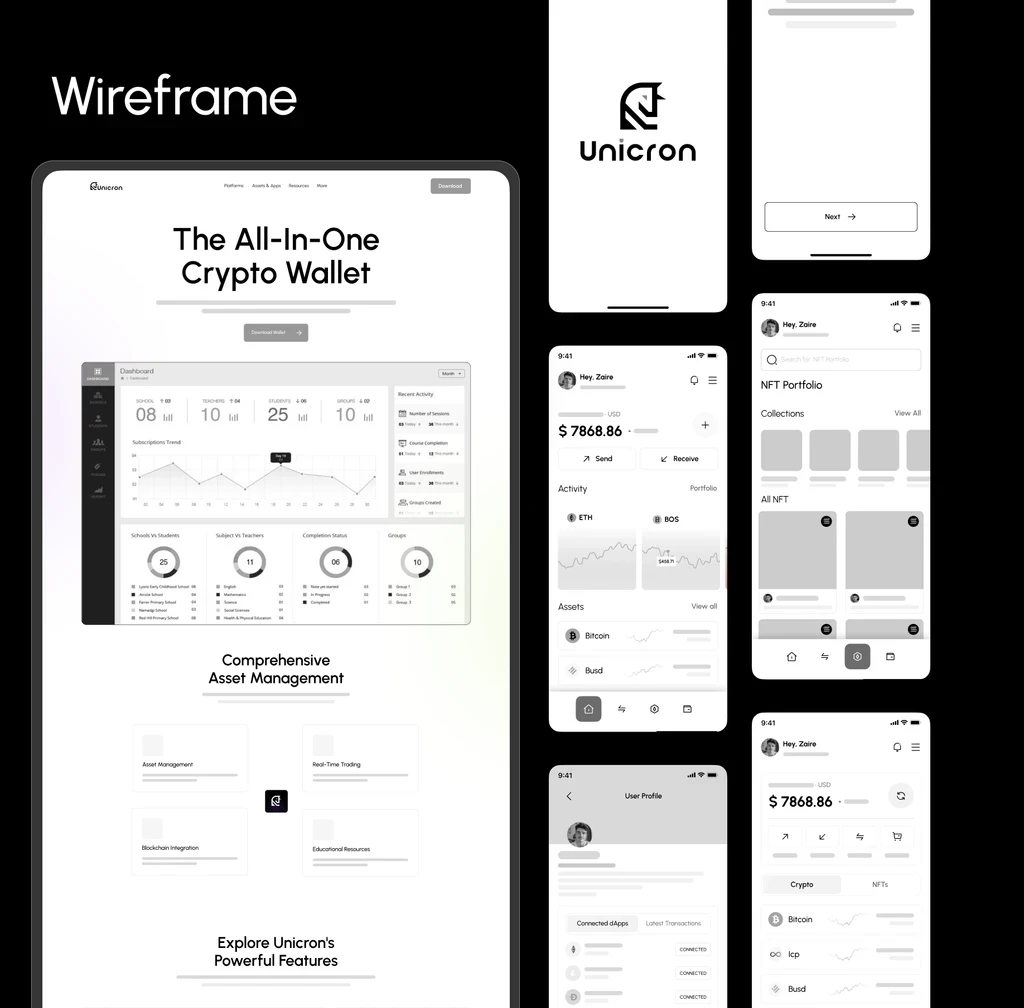
Before a single line of code was written, the team spent four weeks in discovery. This phase is often underestimated. Many teams rush past strategy and jump straight into building. That is one of the most common mistakes in AI product development. During discovery, the Unicron team focused on three key areas:
Understanding the User
The team interviewed 40 real customers across different industries and age groups. They mapped out every step of the customer support experience from the moment a user felt frustrated to the moment their issue was resolved. What they found was eye-opening. Most customers did not care whether they were talking to a human or an AI. What they cared about was speed, clarity, and feeling heard. This insight became the north star for the entire AI product design process.
Mapping the Business Problem
The team worked with the client's internal data team to analyze 12 months of support tickets. They identified that 68% of all incoming tickets fell into just 14 repeatable categories. This meant AI could handle the majority of requests with a high degree of accuracy without replacing the human agents who handled the complex cases.
Defining Success Metrics
Before building anything, the team agreed on what success looked like:
- Reduce first-response time from 6 hours to under 3 minutes
- Resolve at least 60% of tickets without human involvement
- Maintain a customer satisfaction score (CSAT) of 4.2 or above
- Keep escalation to human agents smooth and frustration-free
These metrics guided every design and development decision that followed. At Artonest, our portfolio of AI projects always begins with this kind of structured discovery. It is how our team of designers and developers ensures we are solving the right problem not just building something that looks impressive.
AI Product Design: Building the Experience First
Once the strategy was clear, the design phase began. This is where the Unicron Journey took a different approach from most AI product development projects. Instead of letting the engineers lead and having designers "skin" the interface afterward, the design team drove the process from the front. Good AI product design is not just about how something looks. It is about how the product thinks, responds, and makes users feel.
Conversation Design and Flow Mapping
The team's conversation designers specialists in how humans naturally communicate built out every possible dialogue path the AI might encounter.
They asked questions like:
- What happens when a user asks something the AI does not understand?
- How does the AI hand off to a human without making the customer repeat themselves?
- What tone should the AI use? Formal? Warm? Direct?
After testing 11 different tone variations with real users, the team landed on what they called "Confident Warmth" a voice that was helpful and professional, but never cold or robotic.
UX Design and Interface Architecture
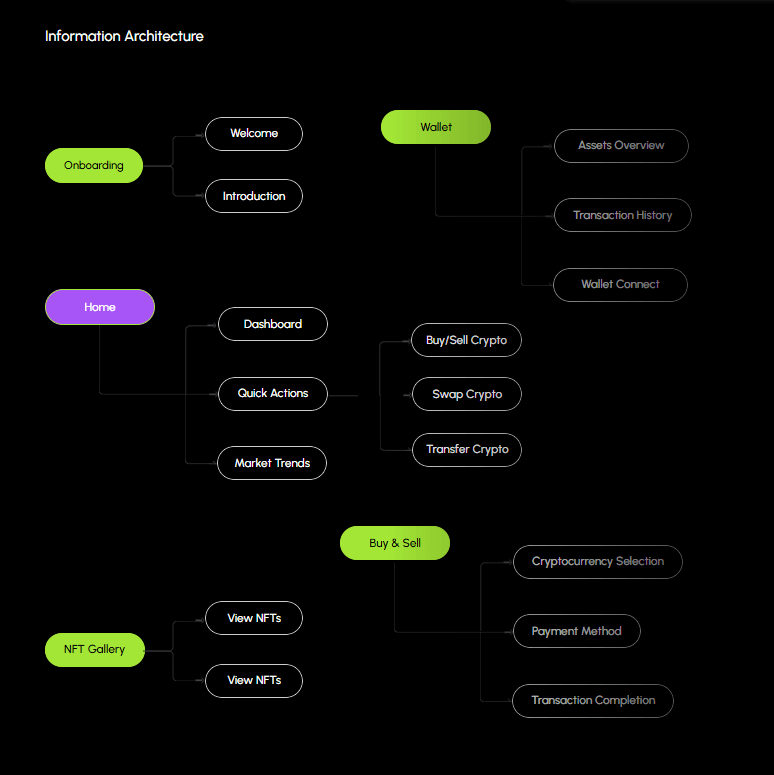
Alongside conversation design, the UX team built the visual interface that support agents would use to monitor AI conversations, step in when needed, and review performance data.
Key UX principles applied during this phase:
- Clarity over cleverness every element on the screen had a clear purpose
- Progressive disclosure agents only saw information they needed, when they needed it
- Accessible design the interface was tested for accessibility compliance from day one
The team created over 80 wireframes and ran three rounds of usability testing before the final design was approved for development.
This is the kind of thorough, human-centered AI product design that separates good products from great ones. If you are looking for a design partner who can bring this level of thinking to your project, the Artonest design team works exactly this way. You can explore our services and past portfolio work at artonest.com.
AI Product Development: From Design to Working Technology
With a validated design in hand, the development phase began. This is where the technical complexity of AI product development becomes real. Building an AI product is fundamentally different from building a standard web application. You are not just writing logic you are training systems to understand language, intent, and context.
Choosing the Right AI Stack
The Unicron development team made a deliberate decision not to build a custom large language model from scratch. Instead, they used a combination of existing foundation models and fine-tuned them on the client's specific support data. This approach sometimes called "build on top of existing AI" saved significant time and cost while still delivering a product that felt custom-built for the company.
The core technical stack included:
- A fine-tuned language model for intent recognition and response generation
- A retrieval-augmented generation (RAG) layer for pulling accurate product knowledge
- A real-time escalation engine that monitored confidence scores and routed to humans
- A feedback loop system that captured every agent correction to improve the model over time
The Artonest Developer Approach to AI Integration
One of the principles the Artonest development team applies to every AI product is this: AI should enhance human judgment, not replace it. This was central to how the Unicron system was built. The AI was never given full autonomy. Instead, it operated with a confidence threshold. If it was less than 85% confident about a response, it would flag the conversation for human review before sending anything.
This single design decision a boundary between AI and human responsibility was the most important technical choice in the entire project.
Iterative Development and Sprint Structure
Development ran in two-week sprints across 14 weeks. Each sprint ended with a functional demo reviewed by both the client's team and a small group of real support Agents. Feedback from agents was treated as primary data. If agents found a workflow confusing or a response inaccurate, that issue was prioritized in the next sprint no Exceptions. By the end of week 12, the team had a working product that was handling test conversations with an accuracy rate of 79% already above the initial target of 70%.
Testing, Quality Assurance, and Ethical AI Review
Testing an AI product requires a different mindset than testing traditional software. A standard software product either works or it does not. An AI product exists on a spectrum. It can be mostly right, slightly wrong, confidently wrong, or unpredictably inconsistent. All of these scenarios need to be tested and accounted for.
Performance Testing
The team ran the AI through over 10,000 simulated conversations before launch. These covered edge cases, unusual phrasings, angry customer tones, and deliberate attempts to confuse the system. The results informed several final adjustments to the confidence thresholds and escalation triggers.
Bias and Ethical AI Review
This phase is one that many AI product development teams skip and it is a serious Mistake. The Unicron team brought in an external reviewer to audit the model's responses for unintended bias. They tested whether the AI responded differently based on how users phrased questions checking for patterns that might disadvantage users who wrote in non-native English or used regional expressions.
Two issues were identified and corrected before launch. This ethical review protected both the company and its customers. At Artonest, every AI product development engagement we lead includes this kind of responsible AI review as a standard part of our service offering not an optional add-on.
Agent Training and Change Management
The human support agents who would work alongside the AI needed to be brought on the journey too. The team ran three workshops where agents used the system in a safe environment, gave feedback, and built confidence in the technology. Change management is often underestimated in AI product development. The best product in the world will fail if the people using it do not trust it.
Launch, Results, and Real-World Performance
After 18 weeks from first discovery call to final deployment, Unicron went live. The first 30 days were closely monitored. The team held daily reviews to track key metrics and respond to anything unexpected. Here is what happened:
The Numbers After 90 Days
- First-response time dropped from 6 hours to an average of 1 minute 47 seconds
- 71% of all support tickets were fully resolved by the AI without human involvement
- CSAT score improved from 3.9 to 4.5 exceeding the original target
- Human agent workload dropped by 58%, allowing agents to focus on complex, high-value cases
- The AI improved measurably each month as the feedback loop system captured corrections
Every single success metric set in Phase 1 was hit. Several were exceeded.
What Surprised the Team
The biggest surprise was not the performance data. It was the reaction from human support agents. Before launch, many agents were anxious about working alongside AI. They worried about job security and whether the system would make their work harder.
After 90 days, surveys showed that 84% of agents felt more satisfied in their roles. They were handling more interesting cases. They felt less burned out. And they trusted the AI because it had been designed — from the very beginning to work with them, not around them. That outcome defined the Unicron Journey more than any metric.
Key Lessons From the Unicron AI Product Development Journey
This case study holds lessons that apply to any team planning an AI product regardless of industry, size, or technical background.
Strategy Before Speed
Rushing into development without a clear strategy is the single biggest risk in AI product development. The four weeks the Unicron team spent in discovery saved months of rework later. If you are planning an AI product, slow down at the start. Define your problem clearly. Know your user. Set your metrics. Then build.
Design Is Not Optional
AI product design is not decoration applied at the end. It is the process of defining how the product thinks, communicates, and behaves. Teams that treat design as secondary to engineering consistently produce AI products that users do not trust or enjoy using. The Artonest design team works at the intersection of human behavior and AI capability. That is what makes the difference.
Humans and AI Are Better Together
The Unicron project showed that the most powerful AI products are not the ones that replace humans they are the ones that make humans more capable. This principle should guide every AI product design decision you make.
Ethical AI Is Good Business
Conducting a bias audit and an ethical AI review was not just the right thing to do it protected the client from reputational and legal risk, and it built user trust that directly contributed to the improved CSAT scores.
The Product Is Never Truly Finished
The Unicron AI system continued to improve after launch. The feedback loop meant every interaction made it smarter. AI product development is not a project with an end date it is an ongoing relationship between product, data, and users.
How Artonest Supports AI Product Design and Development
The Unicron Journey is one example. But it reflects the approach Artonest brings to every project in our portfolio. Whether you need a full AI product built from strategy to deployment, or you need design and development support at a specific phase, our team has the experience to help.
Our services include:
- AI Product Strategy and Discovery
- Conversation Design and UX Design for AI Systems
- Frontend and Backend Development for AI Products
- Ethical AI Review and Testing
- Post-Launch Optimization and Growth Support
Our designers, developers, and strategists have worked with clients across SaaS, e-commerce, healthcare, fintech, and more. We build AI products that work for real users in the real world. You can explore our full range of services and view our portfolio of past work at artonest.com. If you have a project in mind, our team is ready to listen.
Your Business Ready for AI Product Development?
Here are a few signs that your organization is ready to invest in an AI product:
- You have a repeatable process that takes significant human time and resources
- Your users or customers experience friction that faster, smarter technology could reduce
- You have data even moderate amounts that could train or inform an AI system
- You want to move faster, reduce costs, or deliver a better customer experience
If even two of these sound familiar, it is worth having a conversation. AI product development does not require a massive budget or a team of PhDs. It requires clear thinking, smart design, and the right development partner.
Artonest has helped companies at every stage from pre-seed startups to established enterprises figure out how to build AI products that create real value. Our designer and developer teams are experienced, collaborative, and obsessed with building things that actually work.
The Journey Is the Strategy
The Unicron Journey was not a straight line. There were moments of uncertainty. There were sprints that did not go as planned. There were conversations about whether the product was good enough and whether the timeline was realistic. But the team kept returning to what they knew was true: they had done the work upfront. They understood the user. They had a clear strategy. They had built a design that respected both the humans using the product and the AI powering it.
And in the end, that is what AI product development comes down to. Not the technology. Not the algorithms. But the thinking, the process, and the people behind it. If you are building something or thinking about building something we would love to be part of your journey. Visit artonest.com to explore our services, meet our team, and see the portfolio of work we have delivered for clients around the world. Your Unicron Journey starts with one conversation.
Frequently Asked
Questions
1. What is the first step in AI product development?
2. How do designers improve AI user adoption?
3. Do I need a team of experts for AI product design?
4. What are the key benefits of Artonest services for AI?
5. Is AI product development different from app development?
Table of contents
Recent


