

ALL BLOG POSTS
/
UX Design
UX Trends That Actually Matter for SaaS Products in 2026

Stefan Ivic
Author
The SaaS industry is evolving rapidly with new web platforms, AI integrations, and website development frameworks launching constantly, but great UX design remains the real competitive advantage. In 2026, SaaS success depends on user experience, responsive design, and intelligent user interface design that reduces friction and improves retention. At Artonest Design Studio, we focus on building strategic UI UX experiences that help SaaS products grow sustainably in a competitive digital landscape.
1. AI-Integrated UX in Modern Web Applications
Artificial intelligence is transforming modern web and SaaS platforms by reshaping how users interact with digital products. In 2026, AI is deeply embedded into UX design, making websites smarter, faster, and more intuitive. From predictive suggestions to intelligent dashboards, user experience is becoming proactive instead of reactive.
Instead of static interfaces, SaaS websites now offer smart form completion, contextual recommendations, and AI-powered analytics. These features enhance user interface design by reducing manual effort and improving workflow efficiency. For any website development company or web design agency, integrating AI into UI UX is now a competitive advantage.
Predictive suggestions
Smart form completion
Context-aware support
AI-powered analytics
Frameworks like Material UI, Headless UI, Tailwind UI, and Radix UI make it easier for website developers to build responsive web applications powered by intelligent systems. When combined with strong responsive design and structured website layout, AI web design creates seamless digital experiences. This approach strengthens both user experience UX design and performance across devices.
AI-driven UX also supports better SEO website design and digital marketing results. Improved engagement, reduced bounce rates, and smarter web UI interactions positively impact search engine optimization. In 2026, successful web design and development focus on intelligent assistance that enhances usability without overwhelming the user.
Hyper-Personalized Website Interfaces
Generic dashboards and one-size-fits-all websites are no longer effective in modern SaaS products. In 2026, UX design and UI design focus heavily on personalization to improve user experience and engagement. A smart website interface adapts based on user behavior, preferences, and goals.
Modern web applications now use role-based dashboards, personalized widgets, adaptive navigation, and dynamic website layout systems. This approach enhances responsive web design while making the user interface more intuitive. Website developers and web design agencies are prioritizing UI UX strategies that adjust content in real time.
For example, a marketing manager and a product analyst should not experience the same web UI structure. Personalized user interface design ensures each role sees relevant data, tools, and workflows. This level of customization strengthens user experience UX design and improves productivity.
Hyper-personalization also supports better usability testing and long-term retention. When website development aligns with AI-driven insights and responsive design principles, engagement increases and churn decreases. In modern web design and development, personalization is no longer a luxury but a core UX strategy.
Frictionless Onboarding in SaaS Website Design
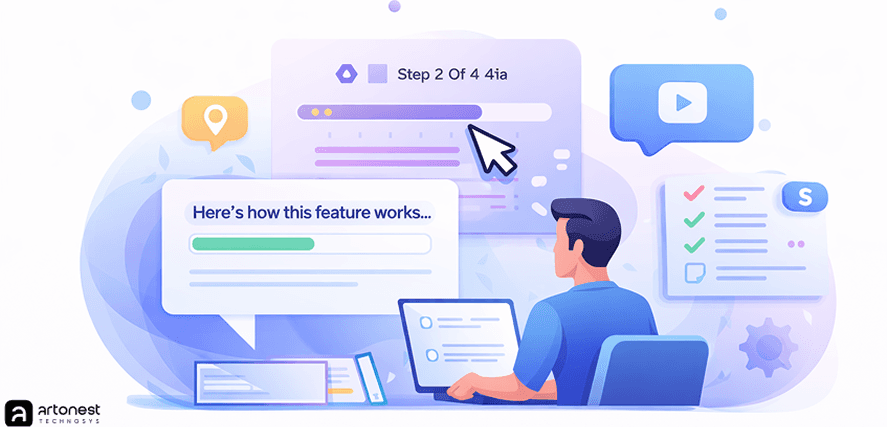
One of the biggest challenges in SaaS website design is user drop-off during the first interaction. Many web platforms lose potential customers because the onboarding experience feels complex, technical, or overwhelming. Strong UX design and user experience strategy focus on simplifying this early journey through clear user interface design and structured web layout.
Modern web design agencies and UX researchers prioritize interactive product tours, micro-task onboarding, and smart tooltips triggered by real-time behavior. These UI UX improvements transform a static website into an intelligent assistant that guides users step by step. This approach strengthens responsive web design and improves overall user interface and user experience design performance.
Progressive feature exposure is now central to UX design and UI design strategy. Instead of overwhelming users with every feature at once, responsive web applications reveal tools gradually based on usage patterns. This method supports better usability testing, reduces confusion, and enhances engagement across web and app environments.
For any website development company or web development agency, reducing friction during onboarding directly impacts retention and SEO website performance. Faster time-to-value improves satisfaction, lowers churn, and strengthens digital marketing outcomes. In 2026, effective web design and development begin with a smooth, intuitive onboarding experience that builds confidence from the first click.
Minimal and Data-First Dashboard UI
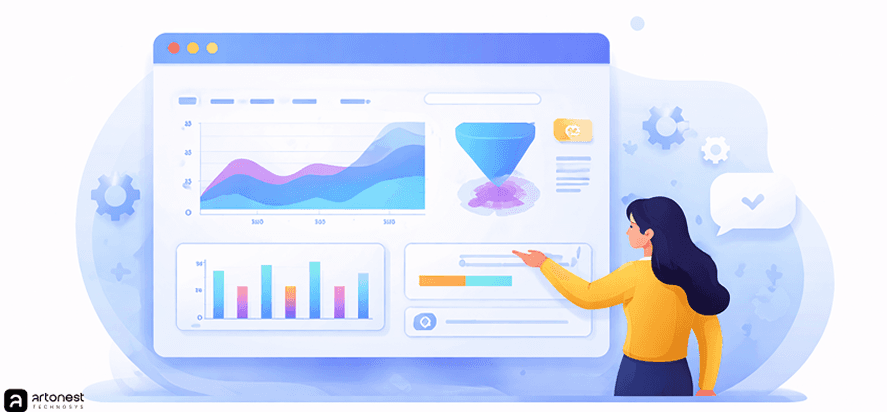
SaaS products are naturally data-heavy, and poor web user interface design can quickly increase cognitive load. When dashboards feel cluttered, users struggle to extract meaningful insights. Modern UX design and user experience strategy focus on simplifying how information is presented across web and app environments.
In 2026, dashboard UI trends center around clean data visualization, structured website layout systems, and card-based responsive web page designs. These patterns support responsive design while keeping the user interface clear and actionable. Website developers and web design agencies are prioritizing clarity over complexity in UI UX execution.
Clean data visualization
Card-based responsive web page layouts
Simplified navigation
Customizable reporting modules
Simplified navigation and customizable reporting modules are becoming essential in SaaS website development. Instead of overwhelming users with dense charts and endless menus, modern web UI frameworks allow flexible and personalized dashboard views. This approach enhances usability testing outcomes and improves overall user interface and user experience design efficiency.
Neumorphism and heavy visual effects are fading as practical UX design takes priority. Clear hierarchy, readable typography, and structured web layout decisions now guide web design and development. Good web design supports clarity over decoration, helping users focus on insights rather than interface distractions.
Responsive Design as a Core Standard
Responsive website design is no longer optional in modern SaaS website development. Users access web platforms through desktop browsers, tablets, mobile devices, and progressive web apps, expecting a seamless user experience across every screen. Strong UX design and user interface design must adapt fluidly to different resolutions without breaking layout, performance, or usability.
Modern responsive web development focuses on flexible grids, adaptive UI components, and performance-optimized front-end systems. For any website development company or web design agency, this means building scalable web UI frameworks that support responsive web design and consistent UI UX experience.
UX Writing and Microcopy Strategy
UX writers are becoming essential in modern SaaS teams because user experience is not only about visual UI interface design. Clear communication inside a web application directly impacts usability, engagement, and retention. Strong UX design and user experience strategy now include structured microcopy across dashboards, forms, and responsive web interfaces.
Form completion rates
Onboarding clarity
Error message understanding
Feature discoverability
Clear microcopy improves form completion rates, onboarding clarity, error message understanding, and feature discoverability. When website developers and web design agencies align UI UX with purposeful content, confusion decreases and trust increases. Great user experience design speaks clearly, supports usability testing, and strengthens overall web performance.
Headless Architecture + Experience-Led Design
Many SaaS platforms are shifting toward headless CMS and component-driven UI systems to support scalable website development. This architecture separates backend logic from the front-end user interface, allowing more flexible web design and development. It enables teams to create faster, more personalized web experiences across multiple devices.
Technologies such as React-based systems, NextUI, Chakra UI, Radix UI, and Tailwind UI support consistent UI UX development while maintaining strong user interface design standards. This approach improves scalability, performance, and personalization within responsive web development.
Conversion-Focused Website Design for SaaS Growth
Your SaaS marketing website is just as important as the product dashboard. High-performing websites prioritize clear value propositions, strategic website wireframes, SEO website design, fast loading speed, and strong call-to-action hierarchy. Effective web design ensures that every page supports both user experience and business growth.
Clear value propositions
Strategic website wireframes
SEO website design
Fast loading speed
Strong call-to-action hierarchy
Whether built using Webflow, Framer, WordPress, or custom website coding in HTML and Python website development, conversion-driven UX is critical. Website design and development must align with SEO, digital marketing strategy, and search engine optimization to improve ranking and lead generation. In 2026, smart web design and development connect user experience UX design directly with measurable growth outcomes.
Final Thoughts
In 2026, SaaS UX is centered on clarity, intelligence, and performance across every web platform and website interface. It is no longer about flashy animations, heavy UI kits, or decorative web design trends. Strong UX design and user interface design focus on solving real user problems through structured, measurable improvements.
Successful SaaS products invest in scalable website development systems, conversion-optimized web design, data-driven UX strategy, and fully responsive web experiences. Whether you are a web design agency, website development company, or SaaS founder, aligning UI UX with SEO website design and digital marketing strategy drives sustainable growth.
The companies that lead the market treat user experience design as a core growth engine, not just a visual design layer.
Frequently Asked
Questions
1. Why is responsive website design important for SaaS in 2026?
2. What is the difference between UI and UX design?
3. How does UX impact SEO and website ranking?
4. What is headless architecture in website development?
5. Why is onboarding important in SaaS website design?
Table of contents
Recent


