

ALL BLOG POSTS
/
Development
Choosing the Right CMS for Scalable Business Websites

Stefan Ivic
Author
A website is no longer a one-time project. For growing businesses, it is a living system that needs to evolve with content, users, products, and technology. This is why choosing the right Content Management System (CMS) is critical for building a scalable business website. The right CMS makes it easy to publish content, maintain design consistency, improve SEO, and scale without rebuilding everything from scratch. The wrong CMS can slow teams down, limit flexibility, and create technical debt over time.
What a CMS Really Does for a Business Website
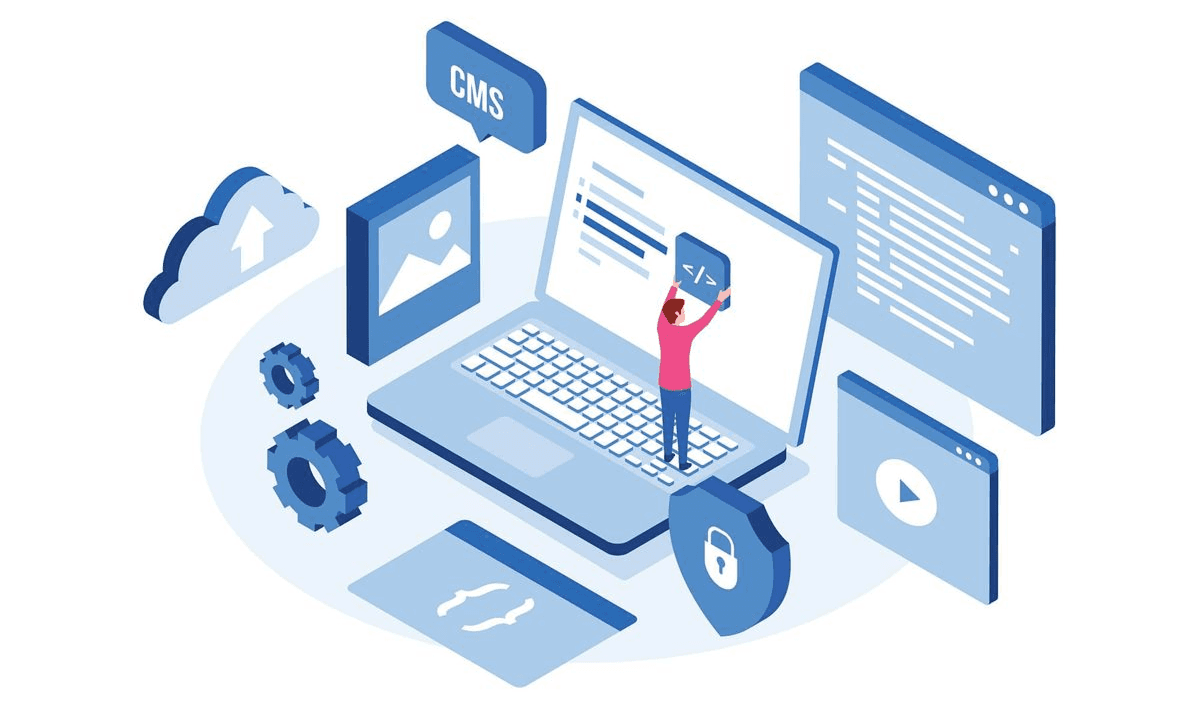
A CMS (Content Management System) is the operational core of a modern business website. It allows teams to create, edit, publish, and organize content without depending on developers for every small update. This flexibility is critical for businesses that want speed, consistency, and control over their digital presence.
Modern CMS platforms go far beyond simple content editing. They support page creation with layout control, blog and resource management, and SEO-friendly content structure that helps websites rank better on search engines. Features like clean URLs, heading hierarchy, meta titles, and descriptions make it easier to align content with SEO strategies from day one.
A strong CMS also handles media and asset management, ensuring images, videos, and files are optimized and organized for performance. With built-in user roles and permissions, teams can collaborate safely, allowing marketers, content editors, and designers to work together without risking site stability.
In addition, modern CMS solutions integrate seamlessly with marketing tools, analytics platforms, CRM systems, and automation software, helping businesses track performance, user behavior, and conversions. For companies focused on scalability, a CMS supports continuous content updates, new pages, multilingual expansion, and future redesigns without rebuilding the entire website.
For businesses planning long-term growth, a CMS is not just a content tool. It becomes the backbone of the website, supporting SEO, UX, performance, collaboration, and scalability while keeping the website flexible as business needs evolve. At Artonest, we see a well-chosen CMS as a strategic foundation that helps brands manage content efficiently, maintain consistent user experiences, and scale confidently without constant rebuilds.
Why Scalability Matters When Choosing a CMS
Scalability is the ability of your website to grow smoothly as your business evolves, without breaking performance, usability, or workflows. When choosing a CMS, scalability is not a “future problem.” It is a core requirement from the start.
As businesses grow, websites naturally expand. A scalable CMS should comfortably support more pages, new content types, and richer media without slowing down or becoming difficult to manage. It should also handle higher traffic volumes while maintaining fast load times and stable performance, even during marketing campaigns or traffic spikes.
Scalability also applies to people and processes. As teams grow, your CMS must support multiple users, clear roles, and structured workflows so content creation, approvals, and publishing stay organized. Without this, collaboration becomes messy and risky.
For growing brands, expansion often means new markets, languages, or regions. A scalable CMS makes it easier to manage multilingual content, regional pages, and localized SEO without duplicating effort or rebuilding the site.
Finally, design and functionality will evolve. A future-ready CMS supports design updates, feature additions, integrations, and platform changes without forcing a complete rebuild. This flexibility saves time, reduces long-term costs, and allows your website to adapt as business goals change.
In short, a scalable CMS protects your investment. It ensures your website can grow with your business, not hold it back.
CMS and SEO Go Hand in Hand
Search engine visibility is deeply connected to how your website is built and managed. A strong CMS plays a critical role in SEO by making it easy to structure, optimize, and maintain content without constant developer support. When the CMS is designed with SEO in mind, optimization becomes part of everyday publishing, not a complex technical process.
A good CMS supports clean URLs, logical page hierarchy, and well-structured content, helping search engines understand what each page is about. Built-in controls for meta titles, meta descriptions, and heading structure (H1, H2, H3) allow content teams to optimize pages naturally as they publish, improving relevance for target keywords.
Performance is another major factor. Modern CMS platforms are built to support fast page loading, optimized assets, and mobile-first layouts, all of which directly impact Google rankings. Search engines reward websites that deliver a smooth user experience across devices, and a well-optimized CMS helps achieve this without heavy manual work.
A CMS also simplifies ongoing SEO efforts. Content updates, internal linking, blog publishing, and landing page optimization can be done quickly, keeping the website fresh and search-engine friendly. This is especially important for businesses working with SEO services, digital marketing agencies, or in-house SEO teams, where speed and consistency matter.
When CMS, SEO, and content strategy work together, websites rank better, load faster, and scale more easily. A well-chosen CMS turns SEO into a continuous, manageable process that supports long-term organic growth.

UI/UX Consistency Through a CMS
A strong CMS plays a key role in maintaining UI/UX consistency across an entire website, no matter how large it grows. By using design systems, reusable components, templates, and predefined layouts, a CMS ensures that every page follows the same visual rules and brand standards. This consistency helps users feel comfortable because the website behaves in a predictable way, making navigation easier and reducing confusion.
From a UX design perspective, consistency improves usability and trust. When buttons, typography, spacing, and layouts remain uniform, users don’t have to relearn how the website works on every page. This leads to better engagement, longer session time, and smoother user journeys. For businesses, it also reduces design and development errors as new pages, blogs, or landing pages are added over time.
A CMS-driven approach allows UI UX designers, web designers, and website developers to scale websites efficiently while preserving brand identity and user experience. Consistent UI and UX are especially important for SaaS platforms, ecommerce websites, and content-heavy business sites where clarity and reliability directly impact conversions.
No-Code and Low-Code CMS Platforms
Modern CMS platforms now include powerful no-code and low-code capabilities, changing how websites are designed and managed. These tools allow teams to build, edit, and update pages visually without relying heavily on manual coding. Designers, marketers, and content teams can move faster while developers retain the ability to add advanced logic, integrations, and performance optimizations when needed.
Popular CMS approaches today include visual CMS platforms for design-led websites, traditional CMS systems with modern block or visual editors, and headless CMS solutions that separate content from presentation for multi-platform delivery. This flexibility supports websites, mobile apps, marketing platforms, and other digital touchpoints from a single content source.
No-code and low-code CMS platforms support faster launches, easier updates, and better collaboration between design and development teams. For growing businesses, this means improved agility, lower maintenance overhead, and the ability to evolve the website without constant rebuilds. When combined with strong UI/UX design, responsive layouts, and SEO-friendly structure, these CMS tools become a foundation for scalable, high-performing digital experiences.
Headless CMS for Growing Businesses
A headless CMS separates content management from design and presentation, giving growing businesses far more flexibility than traditional systems. Content is created and managed in one central place, then delivered to websites, web apps, mobile apps, and other digital platforms through APIs. This makes it easier to maintain consistent messaging, branding, and content structure across every channel your audience uses.
For fast-scaling companies, a headless CMS supports future growth without forcing a complete website redesign. New platforms, features, or user experiences can be added while the same content system continues to power everything behind the scenes. At Artonest, we often recommend headless CMS solutions for businesses that need speed, scalability, and performance while maintaining strong UX design, UI consistency, and SEO-friendly structure. This approach allows teams to innovate without being limited by rigid templates or outdated workflows.
Security and Reliability in CMS Selection
As websites grow, security becomes more important. A reliable CMS offers:
Role-based access control
Regular updates and patches
Secure hosting options
Backup and recovery systems
A secure CMS protects both business data and user trust, which is essential for long-term growth.
CMS Flexibility for Teams and Workflows
As businesses grow, more people become involved in managing the website. Content writers, designers, marketers, and developers all interact with the CMS in different ways, and a flexible system is essential to keep work organized and efficient. A modern CMS is designed to support collaboration without creating confusion or conflicts between teams.
A scalable CMS allows role-based permissions, so each team member can access only what they need. Writers can focus on creating and editing content, designers can manage layouts and visuals, marketers can optimize pages for SEO and campaigns, and developers can handle technical updates without disrupting ongoing work. Features like drafts, approvals, and version control ensure content is reviewed properly before going live and that previous versions can be restored if needed.
This structured workflow keeps content production smooth as teams expand. Instead of slowing down growth, a flexible CMS helps teams work in parallel, publish faster, and maintain quality and consistency across the website.
How to Choose the Right CMS for Your Business
Choosing the right CMS is a strategic decision that affects how your website grows, performs, and adapts over time. Before selecting a platform, it’s important to look beyond current needs and think long term. Ask yourself how quickly your business plans to scale, how frequently content will be updated, and who will manage the website on a daily basis. A CMS that works for a small team today may struggle to support a larger team or higher traffic tomorrow.
You should also consider how much control you need over SEO, page structure, and performance. If organic growth is a priority, the CMS must allow easy management of meta titles, descriptions, URLs, and structured content. Businesses planning to expand into new markets, add multiple languages, or publish content across different platforms will need a more flexible and scalable CMS from the start.
At Artonest Design Studio, we help businesses evaluate these questions carefully before choosing a CMS. The right platform should support your content strategy, simplify workflows, and evolve with your goals. When chosen correctly, a CMS becomes a growth engine for your website, not a limitation.
Final Thoughts
Choosing the right CMS is a strategic decision, not just a technical one. A scalable CMS supports growth by making content easier to manage, improving SEO, maintaining design consistency, and adapting to future needs.
Businesses that invest in the right CMS early build websites that evolve smoothly instead of becoming obstacles. When your CMS supports performance, usability, and flexibility, your website becomes a true growth asset rather than a maintenance burden.
Frequently Asked
Questions
1. How does a CMS support website scalability?
2. What is Framer CMS and how does it work?
3. Can a CMS improve SEO performance?
4. Is Framer CMS good for blogging?
5. How does Webflow CMS support SEO?
Table of contents
Recent


